
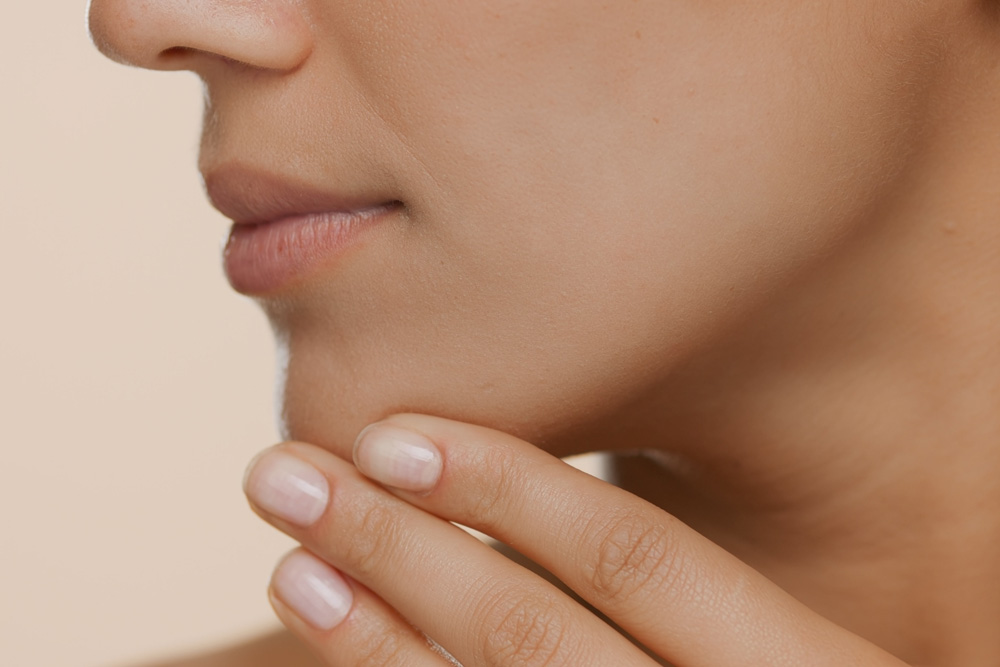
Jowls form as facial fat shifts and skin loses elasticity with age, and while skin care and lifestyle habits can slow the process, they can’t reverse it. For lasting results, surgical options including a facelift or neck lift remain the most effective solutions.
Few things age the face faster than a softening jawline. Jowls can creep up gradually, making someone look tired or older than they feel, even when the rest of their skin care routine is on point. The good news is that jowls are one of the most well-understood and treatable signs of facial aging, with options ranging from simple lifestyle adjustments to advanced surgical procedures. This guide breaks down why jowls form, what can realistically be done about them, and how to know when it’s time to consider a more permanent solution.
What Causes Jowls?
Jowls are one of the most common, and most frustrating, signs of facial aging. They appear when the skin and underlying fat along the jawline begin to sag, creating a soft, drooping line that blurs the once-defined boundary between the jaw and neck. While jowls are often associated with getting older, several factors can contribute to their development:
- Collagen and elastin loss: Starting in our late 20s and accelerating after 40, the skin produces less collagen and elastin, the proteins responsible for firmness and bounce.
- Volume shifts: Facial fat doesn’t disappear with age so much as it migrates downward, pulling the lower face along with it.
- Gravity: Over decades, the constant pull of gravity on looser skin and tissue contributes to sagging.
- Genetics: Some people are simply predisposed to developing jowls earlier or more prominently than others, often due to bone structure or skin type.
- Sun damage and lifestyle: UV exposure, smoking, and significant weight fluctuations can all accelerate skin laxity.
Understanding the root cause matters because it often determines which treatments can actually be effective.
Non-Surgical Options: What They Can (and Can’t) Do
For early signs of sagging, several non-invasive treatments can offer modest improvement:
- Topical retinoids and skin care can improve skin texture and stimulate some collagen production over time.
- Radiofrequency and ultrasound treatments (like Thermage or Ultherapy) use heat energy to tighten skin gently, though results are subtle and temporary.
- Dermal fillers can sometimes camouflage jowls by restoring volume to the cheeks, which softens the appearance of sagging along the jaw.
- Sofwave™ treatment uses ultrasound technology to deliver precise heat to the mid-layer of the skin, stimulating new collagen production for a subtle lifting and tightening effect, typically with little to no downtime.
These options generally work best as a preventive measure or for very mild laxity. Once skin and tissue have genuinely loosened, however, no cream or skin tightening device can lift and reposition them the way surgery can.
Surgical Solutions for Jowls
When jowls are more pronounced, surgical procedures typically offer the most predictable and longest-lasting results. Board-certified plastic surgeon John Connors, MD, notes that the right procedure depends on the patient’s specific concerns, skin quality, and overall facial anatomy.
Facelift
A facelift is widely considered the gold standard for addressing jowls. During this procedure, Dr. Connors repositions the underlying facial muscles and connective tissue, removes excess skin, and re-drapes the remaining skin for a smoother, more youthful contour. Unlike fillers or skin-tightening devices, a facelift can directly address the structural causes of sagging rather than masking them. Modern facelift techniques focus on natural-looking results, avoiding the overly tight or “windswept” appearance associated with outdated approaches.
Neck Lift
Jowls rarely exist in isolation, as they’re usually accompanied by loose skin and banding in the neck, sometimes referred to as a “turkey neck.” A neck lift can target this connected area by tightening the platysma muscle and removing excess skin and fat beneath the chin and along the jawline. Many patients choose to combine a neck lift with a facelift for a more comprehensive rejuvenation, since the jaw and neck share the same underlying support structures. Together, these procedures can restore a cleaner, more defined jawline that non-surgical treatments simply cannot replicate.
Mommy Makeover
While not directly targeted at jowls, a mommy makeover is worth mentioning for patients considering a broader rejuvenation journey. This combination procedure, typically including a tummy tuck, breast lift or augmentation, and sometimes liposuction, addresses changes to the body after pregnancy. Patients who undergo a mommy makeover often go on to consider facial procedures like a facelift or neck lift as a natural next step, since both reflect a desire to restore a pre-aging or pre-pregnancy appearance. A board-certified plastic surgeon can help patients sequence these procedures safely if they’re interested in more than one.
What to Expect from Surgery
Facelifts and neck lifts are typically performed under general anesthesia and can take a few hours to complete. Recovery may vary by individual, but most patients experience:
- Swelling and bruising for the first one to two weeks
- A return to light daily activities within 10 to 14 days
- Final results becoming more visible over the following months as swelling fully resolves
- Results that can last upwards of 10 years, depending on skin quality, genetics, and lifestyle
Choosing an experienced, board-certified plastic surgeon is essential, since technique and approach significantly affect both safety and how natural the final results appear.
Key Takeaways
- Jowls develop due to a combination of collagen loss, volume shifts, gravity, and genetics, not just “getting older.”
- Non-surgical treatments such as fillers and skin-tightening devices can help with mild sagging but won’t reverse significant jowls.
- A facelift can directly address the structural causes of jowls by repositioning tissue and removing excess skin.
- Combining a facelift with a neck lift often provides the most complete and natural-looking rejuvenation of the lower face and neck.
- Consulting a board-certified plastic surgeon is generally the best way to determine which procedure (or combination of procedures) fits your goals.
If jowls or a softening jawline are affecting your confidence, the first step is a personalized consultation to explore your options. Contact our practice to schedule a consultation with Dr. Connors to find the right solution for your goals.