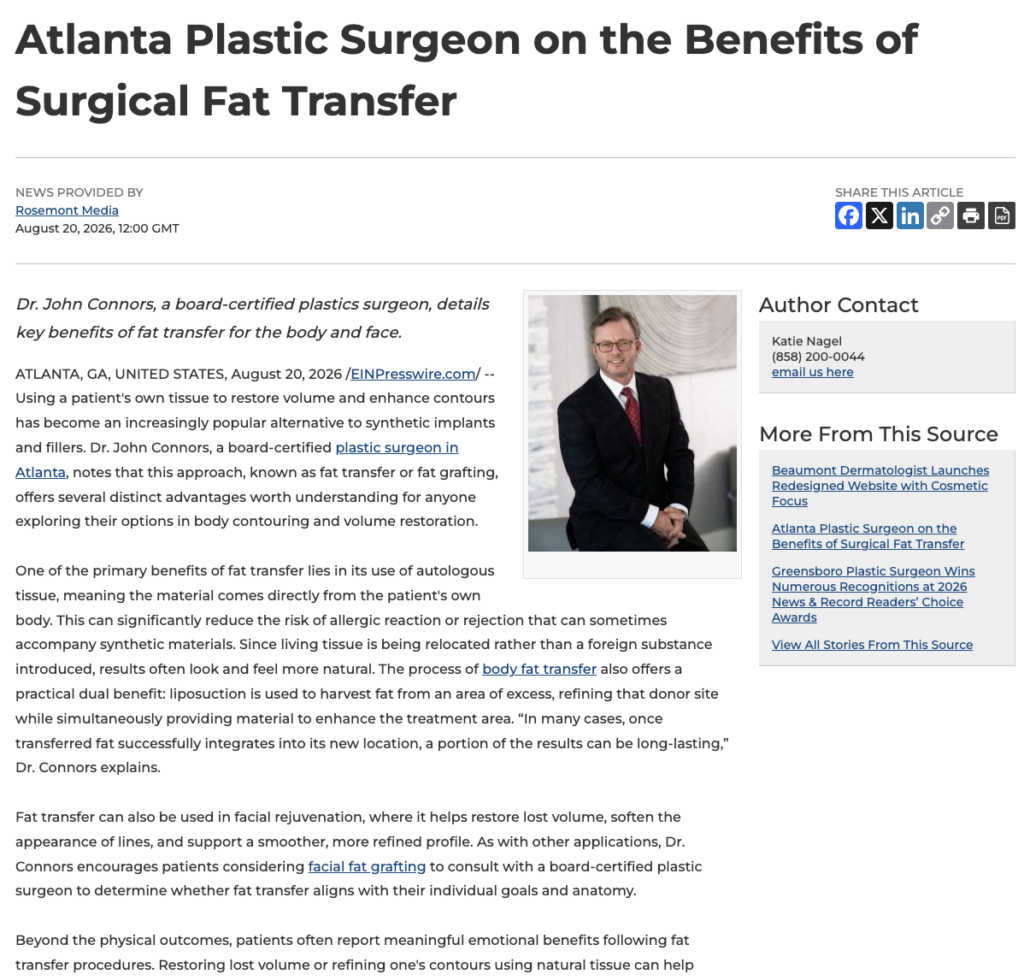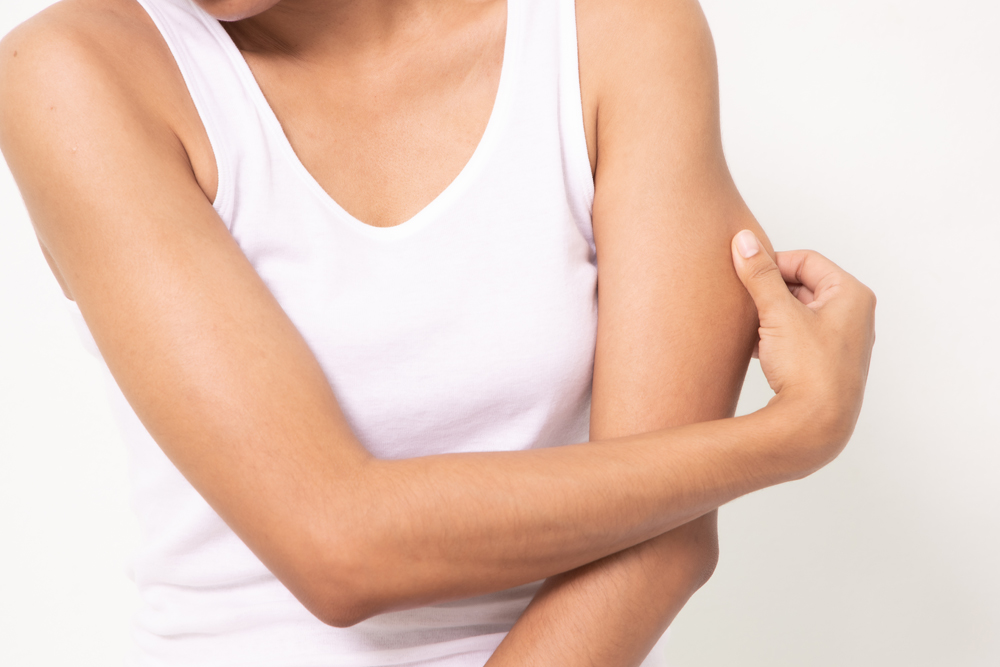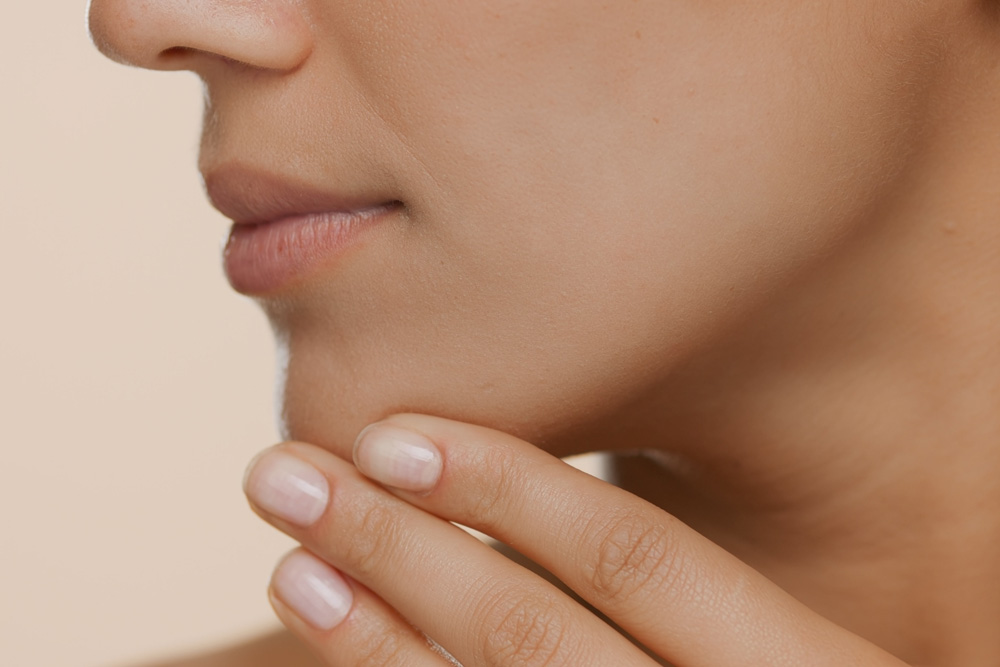
Fat transfer body contouring can refine the physique naturally (i.e., without implants or synthetic fillers). Using advanced harvesting and grafting techniques, Dr. Connors can sculpt your body by removing excess fat from one area and strategically redistributing it to another. Whether you want to enhance your buttocks, hips, breasts, or another part of your body, fat transfer can provide subtle, long-lasting volume using your body’s own tissue.
As a leader in aesthetic surgery, our Atlanta plastic surgeon tailors each fat transfer procedure to your individual goals, anatomy, and lifestyle. By combining artistry with the latest in surgical innovation, we can help you achieve more harmonious body contours and a confident, naturally beautiful look.
- Sedation: General or local anesthesia
- Potential Benefits: Natural-looking volume replenishment and contours; improved balance and proportion; dual benefit of slimming one area while enhancing another; no risk of allergic reaction
- Longevity of Results: Variable, but often long-lasting
- Recovery: Patients can usually resume everyday activities within one to two weeks; intensive exercise should be avoided for about three weeks

What Are the Benefits of Fat Transfer?
Fat transfer offers a unique set of advantages that set it apart from synthetic fillers and implants. Since the transferred material comes from the patient’s own body, the risk of allergic reaction or rejection is virtually eliminated. Results tend to look and feel exceptionally natural since living tissue is being restored rather than a foreign substance introduced. This procedure also provides a dual benefit of improving the donor site through liposuction while enhancing the treatment area. Procedure outcomes can be longer-lasting than traditional dermal fillers, with a portion of the transferred fat integrating permanently into the surrounding tissue.
For patients seeking a more natural, minimally invasive approach to volume restoration, fat transfer can be a viable option.
Who Is a Candidate for Fat Transfer?
Good candidates for fat transfer are generally individuals in good overall health who are looking to restore lost volume, improve contours, or address surface irregularities without the use of synthetic materials. Ideal candidates often have sufficient donor fat available, typically in areas such as the abdomen, thighs, or flanks, for harvesting. Those who have experienced volume loss due to aging, significant weight loss, or other factors usually see excellent results. Candidates should have realistic expectations about outcomes, understanding that while some transferred fat may be reabsorbed by the body, lasting improvement can be achieved. A consultation with Dr. Connors can help determine candidacy.
What Does the Fat Transfer Procedure Involve?
The fat transfer procedure generally involves three primary steps:
- Harvesting – Fat is removed from donor areas (commonly the abdomen, hips, or thighs) using gentle liposuction techniques that preserve fat cell viability.
- Purification – The extracted fat is decanted and hand-processed. In some cases, we use the state-of-the-art Sientra Viality™ or Allergan REVOLVE™, which are closed systems that allow for maximum fat survival.
- Injection – Using a series of small, precisely placed injections, Dr. Connors adds volume to the targeted areas, sculpting natural contours and symmetry.
What If I Don’t Have Enough Fat for Transfer?
Leaner patients who lack sufficient fat for grafting may benefit from alternative options, such as alloClae™ or Sculptra® Aesthetic. AlloClae™ is a revolutionary treatment that can provide long-lasting structural volume using purified human donor tissue. Meanwhile, Sculptra® Aesthetic is a biostimulator designed to gradually enhance volume, stimulate collagen production, and improve skin quality. During your preoperative appointment, we can help you choose the ideal option for your needs.
How Long Do Fat Transfer Results Last?
When performed by a skilled and experienced plastic surgeon, fat transfer can deliver beautifully enhanced contours that last for many years. While it is natural for a portion of the transferred fat to be reabsorbed by the body during the initial healing period, modern strategies are designed to maximize fat survival and provide long-term volume retention.
Once the remaining fat cells establish a blood supply, they typically become a lasting part of the treated area. Patients usually enjoy enduring improvements in fullness, symmetry, and body contour, especially when results are maintained with a stable weight and healthy lifestyle. With this in mind, graft take rates can vary, and repeat procedures may be required for touch-ups or further refinement depending on the patient’s goals.
Are There Non-Surgical Fat Transfer Options?
Although non-surgical options cannot replicate the comprehensive and customizable results of fat transfer, they can be a great alternative for patients with mild volume concerns or those seeking a less invasive solution. Injectable dermal fillers can be an effective option for subtle contouring, wrinkle reduction, or volume restoration in smaller areas. These products range from hyaluronic acid-based fillers for temporary volume to collagen-stimulating injectables that build structure over time. Meanwhile, wrinkle-relaxing injectables like BOTOX® Cosmetic may complement volumizing treatments by softening dynamic lines and enhancing overall facial rejuvenation.
For patients who are not ideal candidates for fat transfer (particularly those without adequate donor fat or those who have experienced fat loss after an initial transfer), alloClae™ or Sculptra® Aesthetic may be the better choice. Our team can help determine which solution is best suited to meet your goals.
Complementary Procedures to Fat Transfer
Fat transfer can work well alongside other cosmetic procedures, allowing patients to address multiple aesthetic concerns in a single treatment plan. Facelift surgery and fat transfer are commonly paired, as repositioning facial tissue and restoring lost volume together can produce a more comprehensive, natural-looking rejuvenation. Eyelid surgery (blepharoplasty) is another popular complement, refining the eye area while fat transfer softens surrounding hollows. Body contouring procedures such as liposuction pair naturally with fat transfer since the harvested fat is a byproduct of the contouring process itself. For patients seeking a more natural alternative to implants, fat transfer can also be combined with or used in place of traditional breast augmentation to enhance size and shape using the body’s own tissue. Additionally, skin resurfacing treatments, including laser therapy and chemical peels, can further enhance overall results by improving skin tone and texture alongside restored volume.
To learn more about fat transfer surgery, we invite you to schedule your preoperative appointment at Plastic Surgery Group Atlanta.